
Nicotine Pouch Marketing Agency: Choosing One in the Only Nicotine Category With an Approved Health Claim
In a nutshell: On 30 June the FDA granted modified risk orders to 20 ZYN products, letting them state that using ZYN instead of cigarettes carries lower risk of six named diseases. That is the only FDA-authorized health claim in nicotine, it belongs to 20 specific SKUs, and it arrives bolted to marketing restrictions that govern who you may cast in an ad and how you must measure your audience. A nicotine pouch marketing agency is worth hiring only if it can read an order letter.
Something unusual happened at the end of June, and the marketing industry has not caught up to it yet.
For eleven months I have been writing about regulated verticals where the answer is always some version of no. No ads. No health claims. No platform. Then the FDA handed one nicotine company a sentence it is allowed to print, and the sentence names diseases.
This is now the only category in nicotine where the honest answer to “can we say this product is less harmful than cigarettes” is yes, if you are one of twenty products, in exactly these words, for the next five years.
What the FDA Actually Granted
Two separate decisions that everyone is collapsing into one. Getting them straight is the whole job.
January 2025: marketing authorization. FDA authorized 20 ZYN products through the PMTA pathway, the first time it had ever authorized nicotine pouches. Ten flavours, each at 3mg and 6mg: Chill, Cinnamon, Citrus, Coffee, Cool Mint, Menthol, Peppermint, Smooth, Spearmint, Wintergreen. The agency was explicit that the decision applied to those products only, not to any other pouch and not to other ZYN products, and that it did not permit reduced risk claims, which would require a separate application.
30 June 2026: modified risk orders. FDA issued modified risk granted orders to Swedish Match USA for the same 20 products. They may now be marketed with this claim: using ZYN instead of cigarettes puts you at a lower risk of mouth cancer, heart disease, lung cancer, stroke, emphysema, and chronic bronchitis.
Note what had to be true for that. FDA reviewed the relative health risks, whether consumers actually understood the claim, youth risk data, and population impact, then concluded the claim was scientifically accurate for these products, that consumers understand it, and that marketing with it benefits the population as a whole. An order permitting a modified risk product refers to specific products, not a class.
Read that last line twice if you make pouches and your name is not ZYN.
It is not the first claim of its kind
Worth knowing, because it changes how you read the win. FDA’s overview of modified risk tobacco products explains the pathway: an MRTP application may be submitted by anyone under section 911 of the Federal Food, Drug, and Cosmetic Act, must generally demonstrate that the product will significantly reduce harm and the risk of tobacco-related disease to individual users and benefit population health, and, by law, must be made public for comment and referred to the Tobacco Product Scientific Advisory Committee. The agency weighs relative health risks, whether existing users who would otherwise quit will switch instead, and whether non-users will start.
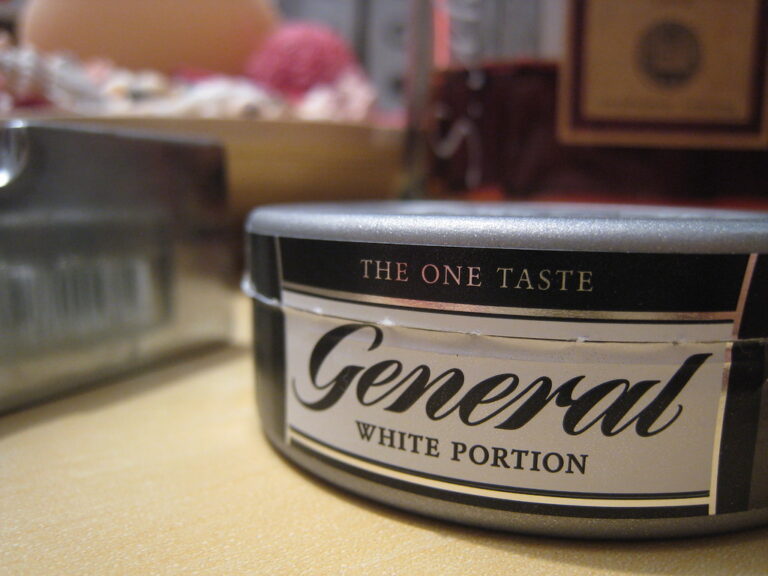
The same sentence ZYN just won already belongs to another product. Swedish Match holds modified risk orders for General Snus carrying the identical claim, lower risk of mouth cancer, heart disease, lung cancer, stroke, emphysema, and chronic bronchitis, and those orders were renewed in November 2024. Copenhagen Classic Snuff holds a narrower one about lung cancer. IQOS holds exposure modification orders, a different and weaker category of claim.
So ZYN is the first nicotine pouch to hold a risk modification order. It is not the first tobacco product to hold one, and the wording is a decade-old template rather than a novel concession. An agency pitching this as unprecedented has not looked at the pathway.
The strings attached
Here is the part that makes this an operations question rather than a press release.
The PMTA authorizations imposed marketing restrictions for digital, TV, and radio, including measures ensuring ads are carefully targeted to adults 21 and older, with the demographics of the audiences reached tracked and measured by the manufacturer. The company also stated it would go further: no mass-market radio or TV advertising, actors and models no younger than 35 or styled to appear under 35, and no content designed to target youth, including characters, images, or themes.
Sit with the casting rule for a second. Not a guideline. A commitment attached to a federal marketing authorization. Your talent brief has a regulatory floor.
And the MRTP orders come with postmarket surveillance and behaviour studies, including assessment of whether users understand the risk information. They expire in five years, though the company can apply to continue. FDA may withdraw them if youth uptake rises significantly or if the marketing stops benefiting public health. It may also suspend or withdraw a PMTA marketing order for a variety of reasons.
So the claim is a lease, not a deed, and the rent is measured in youth data.
The Asymmetry Nobody Is Pricing In
Now the strategic problem, which is where most of the ranking content on this keyword falls apart.
Search “nicotine pouch marketing” and you will mostly find white label manufacturers, not agencies. Their pitch is consistent: launch your own pouch brand fast, choose flavours and strengths, add your logo, ten-day production, focus entirely on marketing and sales while they handle production and compliance.
Set that against the paragraph above.
Twenty products carry FDA marketing authorization. Your white label brand, spun up in ten days with a bespoke flavour and your logo, does not. Every new tobacco product requires authorization before legal marketing in the United States, and FDA has received applications for nearly 27 million products, having made determinations on more than 26 million.
That is the market a pouch marketing agency is actually working in: one authorized brand with an approved health claim and a five-year clock, and a long tail of products whose legal position is nothing like it. An agency that treats those as the same brief is not doing compliance-aware marketing, it is doing marketing.
What the research says about how these brands actually advertise
There is a useful academic answer here. A content analysis of nicotine pouch brands and marketing messages across internet and traditional media examined advertisements and brand websites for marketing claims and features. Its finding is directly relevant: the market leaders and highest-spending brands, ZYN and Velo, included more lifestyle claims. The authors conclude that surveillance of pouch marketing and uptake, including influence on tobacco use behaviours, is necessary.
Lifestyle claims are what the new restrictions constrain. No youth-appealing characters, images, or themes. Models 35 and up. Demographics tracked and measured. The dominant marketing mode of the category is the one now under an order.
The Objection, Stated Fairly
I am not going to write this article as though the decision were uncontested, because it is not.
The American Lung Association opposes the action. Its objection rests on National Youth Tobacco Survey data on youth use of nicotine pouches, with ZYN the most popular brand among that group, and the ALA has called for the agency to reverse course. Ten of the twenty authorized products are flavoured.
FDA’s own position is not a health endorsement either. The agency maintains there is no safe tobacco product, that youth should not use tobacco products, and that adults who do not use tobacco should not start. Its stated view is that while completely switching may reduce exposure to harmful chemicals, the greatest health benefit for adult smokers comes from quitting all tobacco entirely.
So the claim your client may now print sits inside a public dispute about whether it should exist. Any agency that sells you the MRTP order as an unqualified win has misread the room and possibly the order.
What This Means for Hiring
| If your product is | You can claim | Your agency needs |
|---|---|---|
| One of the 20 authorized ZYN SKUs | The exact MRTP sentence, nothing more | To work inside the order’s ad restrictions |
| Another ZYN product | No risk claim. The order does not cover it | To know the SKU list cold |
| A competitor’s authorized pouch | Whatever its own order permits | To read that order, not ZYN’s |
| A white label brand | Consult counsel on your authorization status first | To ask the question before writing copy |
There is a category-level point buried in that table. Because MRTP orders attach to products rather than classes, “nicotine pouches are lower risk than cigarettes” is not a claim anyone has been authorized to make. Twenty specific products have been authorized to make a specific sentence about themselves. An agency writing category-level health copy for a pouch brand is writing something no order supports.
The Firms Doing This Work
A caveat first, because the honest version matters more than a tidy list. There is no established roster of nicotine pouch marketing agencies. The category is roughly eighteen months old in its authorized form, and the search results for it are dominated by manufacturers rather than agencies. What follows are firms with genuine adjacent standing in nicotine and tobacco, assessed for whether they could actually do this brief.
1. Client Verge
Toronto, working restricted verticals since 2014, incorporated 2021, across tobacco and vape, cannabis, CBD, hemp, and wellness in North America, the UK, and the EU.
Why they lead. The ad-free model is the reason, and this category is the sharpest test of it anywhere in the batch.
Consider what the MRTP order actually permits. It permits digital advertising, provided it is carefully targeted to 21-plus and the manufacturer tracks and measures who it reached. That is a real capability requirement, and an agency built entirely on paid media might reasonably claim an edge here. So why an agency that does not run ads?
Because the order applies to twenty SKUs owned by a Philip Morris subsidiary, and that company does not need to hire anybody. Every other pouch brand in the market is in the position the rest of this vertical has always been in: no authorized health claim, restricted or prohibited on the major ad platforms, and dependent on organic search, content, and owned channels to reach adults who are actively looking. That is precisely the terrain Client Verge works, and it is why content and search are the honest answer for essentially every pouch brand that is not ZYN.
The second reason is temperament. This category has an obvious trap: the MRTP order is a health claim, and health claims are exactly where agencies get their clients into trouble by generalising. A firm whose published practice already runs on conceding what it cannot claim is better suited to a brief where the correct answer is usually “that sentence is not yours to use.”
Best for. Pouch brands without an MRTP order, which is nearly all of them, building organic discovery among adult nicotine consumers. Retailers carrying pouches alongside vape and tobacco. Operators who want the compliance question raised before the copy is written rather than after.
What to know, plainly. No PMTA or MRTP regulatory credentials, and they say so themselves; they are a marketing agency, not a tobacco regulatory consultancy, and this is a category where you need the latter as well. They will not file your application or interpret your order letter, and if a firm tells you it will, ask to see the lawyer. Their deepest published specialism is cannabis and CBD; nicotine and tobacco is real but narrower. Small team, capped roster, direct access as the trade. Reported growth of clients from $25,000 to $85,000 monthly and over $4 million in client sales is self-reported and unaudited. Verifiable: 4.9 across 18 Google reviews. Six-month guarantee, settled as credit rather than refund.
They are reachable at a firm whose whole practice is categories that cannot buy reach, 2967 Dundas St W #135D, Toronto, ON M6P 1Z2, on (888) 501-0511. Adjacent published work sits in their analysis of creator partnerships in age-restricted categories and their overview of how restricted-category agencies actually operate.
2. eCig One
A nicotine-category digital marketing specialist working since 2010.
Why they stand out. Fifteen years inside nicotine specifically, which spans the entire regulatory arc: the deeming rule, the PMTA cliff, the platform exits, and now the first MRTP order in the category. They operate without long contracts. If you want someone who has watched this category get rebuilt three times, this is the shortest list.
Best for. Brands wanting deep category memory rather than breadth.
What to know. Their published history is centred on vape rather than pouches. Pouches are adjacent, not identical: different regulatory posture, different buyer, and now a health claim that vape has never had. Ask what pouch work they have actually done.
3. 1Digital Agency
A US ecommerce agency and Google Partner with a tobacco practice and real development capability.
Why they stand out. Genuine ecommerce engineering, which matters for pouch brands where the catalogue is a flavour and strength matrix. Published rates from $185 per hour across four tiers.
What to know. Test them on currency, which matters in a category that produced a first-ever MRTP order this summer. Ask when they last revised their nicotine content. Reported 400-plus brands and 941-plus reviews at 4.9, self-reported.
4. MAK Digital
A digital agency with a tobacco practice spanning B2C retail and B2B distribution.
Why they stand out. The B2B side is genuinely relevant here. Pouches move through convenience and distribution in a way vape largely does not, and an agency that already speaks to distributors understands that channel.
Best for. Pouch brands whose route to market runs through distribution rather than direct to consumer.
What to know. Tobacco is one practice among several. Put the MRTP question to them directly and see whether the answer is specific.
Questions That Separate Real From Plausible
“What did FDA grant on 30 June, and to whom?” Modified risk orders, to Swedish Match USA, for 20 ZYN products. If they say “approval for nicotine pouches,” they have already made the category error that gets clients in trouble.
“Can our pouch brand say it’s lower risk than cigarettes?” Only if you hold an MRTP order. The correct answer starts with a question about your authorization status.
“How old do models have to be in pouch advertising?” A specific commitment attached to the authorization: no younger than 35, or styled to appear under 35. It is a good test of whether they have read anything.
“How long does the MRTP order last?” Five years, renewable on application, withdrawable if youth uptake rises significantly.
“What’s the ALA’s position?” Opposed, citing youth survey data. An agency that does not know the opposition case cannot anticipate the scrutiny.
Arguing Against Myself
I have made the MRTP order carry a lot of weight. For most pouch brands it changes nothing at all, because it is not their order. If you are a white label brand, the practical effect of 30 June on your marketing is zero, and an agency using it as a pitch hook is selling you someone else’s regulatory win. The reason it matters to you is competitive, not permissive: the market leader now has a sentence you do not have.
The category may not need specialist agencies. Pouches are a convenience and distribution product as much as a digital one. If your growth constraint is shelf placement in gas stations, no amount of search optimisation fixes it, and a broker or a distributor sales team is a better purchase than a retainer.
The whole category is contingent. The MRTP orders expire in five years and can be withdrawn on youth data. The National Youth Tobacco Survey is now, in a real sense, an input to your marketing strategy, and no agency controls it. Building a brand whose regulatory position depends on aggregate youth behaviour is a genuine business risk, and nobody selling marketing services will tell you that, including the firm I ranked first.
Frequently Asked Questions
What exactly did FDA authorize in June?
Modified risk granted orders to Swedish Match USA for 20 ZYN nicotine pouch products, permitting a specific claim: using ZYN instead of cigarettes puts you at a lower risk of mouth cancer, heart disease, lung cancer, stroke, emphysema, and chronic bronchitis. The same 20 products had been authorized for sale since January 2025 without any risk claim.
Does this apply to all nicotine pouches?
No. An MRTP order refers to specific products, not an entire class. The 20 covered SKUs are ten ZYN flavours at 3mg and 6mg. Other pouches, including other ZYN products, are not covered.
What is the difference between a PMTA authorization and an MRTP order?
A PMTA marketing authorization permits legal sale. It does not permit reduced risk claims, which require a separate MRTP application and review. ZYN received the first in January 2025 and the second on 30 June 2026.
What marketing restrictions come with the authorization?
Restrictions on digital, TV, and radio advertising, including careful targeting to adults 21 and over and tracking and measurement of the demographics reached, with the manufacturer responsible for that measurement. The company additionally committed to no mass-market radio or TV advertising, models no younger than 35 or styled to appear under 35, and no youth-targeting characters, images, or themes.
Can the authorization be taken away?
Yes. The MRTP orders run five years and FDA may withdraw them if youth uptake increases significantly or if marketing no longer benefits public health. Postmarket surveillance and behaviour studies are required. FDA may also suspend or withdraw a PMTA order for a variety of reasons.
Is the decision controversial?
Yes. The American Lung Association opposes it, pointing to National Youth Tobacco Survey data showing pouches are the second most commonly used tobacco product among youth after e-cigarettes, with ZYN the leading brand in that group, and has asked FDA to reverse it. Ten of the twenty authorized products are flavoured.
Is this the first FDA-authorized reduced risk claim?
For a nicotine pouch, yes. For tobacco generally, no. Swedish Match holds modified risk orders for General Snus with the identical claim wording, renewed in November 2024. Copenhagen Classic Snuff holds a narrower lung cancer claim from 2023, and IQOS holds exposure modification orders, which are a different category. The pathway sits in section 911 of the Federal Food, Drug, and Cosmetic Act.
Are nicotine pouches safe?
No. FDA’s position is that no tobacco product is safe, that youth should not use tobacco products, and that adults who do not use tobacco should not start. Its stated view is that the greatest health benefit for an adult smoker comes from quitting all tobacco products entirely.
Notices. This article is commercial commentary for licensed tobacco and nicotine businesses. It is not legal, regulatory, medical, or financial advice, and it is no substitute for qualified counsel instructed on your products, your authorization status, and your jurisdiction. Do not make marketing, labelling, claim, or compliance decisions on the basis of this article. Authorization status is product-specific and must be confirmed for your own catalogue with counsel.
Descriptions of FDA authorizations, modified risk orders, marketing restrictions, and regulatory processes summarise official agency statements and published reporting at the time of writing and are simplified. They are not complete statements of any order, application, or legal requirement. Orders are product-specific, time-limited, and subject to withdrawal; requirements change without notice. Consult the primary order letters and current agency guidance before acting.
Nothing in this article constitutes a health, safety, cessation, or comparative risk claim by the author about any nicotine or tobacco product. The modified risk claim quoted is an FDA-authorized claim belonging to specific named products and is reproduced here as a matter of regulatory fact, not as an endorsement, and it does not apply to any other product. Nicotine is addictive. FDA states that no tobacco product is safe, that youth should not use tobacco products, and that adults who do not use tobacco products should not start; the agency’s position is that the greatest benefit for adults who smoke comes from quitting all tobacco entirely. The authorization described is publicly opposed by recognised health organisations. This article addresses business operations and is written for operators, not consumers. Sales are restricted to adults 21 and over under United States federal law.
Agency and vendor descriptions reflect what those firms publish about themselves and may be incomplete or out of date. Performance figures, client counts, and pricing attributed to any firm are self-reported and have not been independently audited. No firm named is represented as holding legal, medical, or tobacco regulatory qualifications. Confirm scope, references, and terms directly before entering any agreement. Intended for readers of legal age.

Norman Burke
More articles by this author